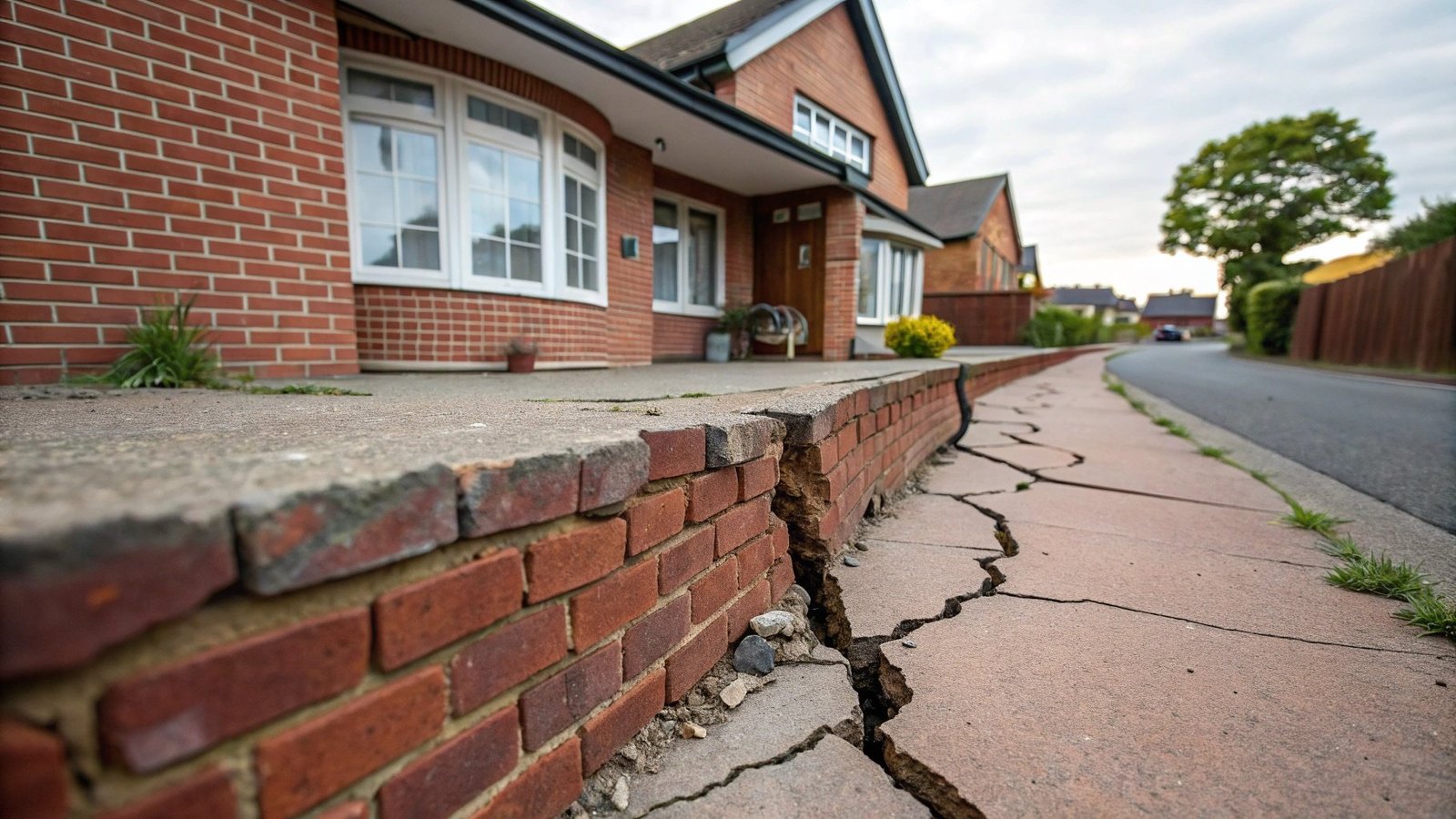
Subsidence is one of the most serious structural issues that can affect residential property in Luton and across Bedfordshire. As experienced chartered surveyors, we've inspected thousands of properties and understand the fear that subsidence can cause homeowners. This comprehensive guide explains everything you need to know about subsidence, from identification to treatment.
📋 Table of Contents
💡 Key Takeaways
- Subsidence is downward ground movement affecting property foundations
- Common causes: clay soil shrinkage, tree roots, and leaking drains
- Diagonal cracks wider than 3mm require professional investigation
- Most subsidence is repairable (£10,000-£50,000 typical costs)
- RICS chartered surveyors can identify issues early
- Repaired subsidence properties can be good purchases with due diligence
What Is Subsidence?
Subsidence occurs when the ground beneath your property moves downward, causing the foundations to sink. This downward movement creates stress on the building's structure, leading to cracks, distortion, and potentially serious structural damage.
It's important to distinguish subsidence from similar issues. Settlement is normal in new properties as the building adjusts to its foundations. Heave is the opposite problem – when the ground swells and pushes foundations upward. Subsidence specifically refers to downward ground movement affecting established properties.
Common Causes of Subsidence
Our building surveyors regularly identify several key causes when conducting Level 3 building surveys across Bedfordshire:
Clay Soil Shrinkage
Clay soil is particularly common in parts of Luton and surrounding areas. During dry weather, clay shrinks as moisture is extracted, creating voids beneath foundations. This is the most common cause of subsidence in residential property across the UK. Trees and large shrubs near buildings exacerbate this problem by drawing additional moisture from the soil.
Tree Root Damage
Tree roots can cause significant subsidence problems. As trees grow, their roots seek out moisture, sometimes penetrating beneath foundations and removing supporting soil. When trees are removed, the opposite problem can occur – the soil rehydrates and swells, causing heave. Our property consultants always assess nearby vegetation during surveys.
Leaking Drains
Water from damaged drains can wash away supporting soil beneath foundations, creating voids. This type of subsidence often affects one corner or side of a property where the damaged drain is located. During comprehensive building surveys, we recommend drainage surveys when we suspect this issue.
Mining and Ground Instability
While less common in Bedfordshire, some areas have historical mining activity or naturally unstable ground. Our chartered surveyors consider local geology and history when assessing structural issues.
⚠️ When to Act Immediately
Contact a chartered surveyor urgently if you notice diagonal cracks wider than 3mm, sudden door/window sticking, or visible wall distortion. Early intervention can prevent costly repairs and protect your property value.
How to Identify Subsidence: Key Warning Signs
Not all cracks indicate subsidence, but certain patterns raise concerns during property surveys. Here's what our building surveyors look for:
Crack Patterns and Locations
Diagonal cracks are the classic subsidence indicator. These typically run at 45-degree angles from corners of windows and doors. They're often wider at the top than the bottom – this tapering pattern suggests ongoing movement.
Cracks wider than 3mm require investigation. Hairline cracks are common in most properties and aren't concerning. However, cracks you can fit a coin into deserve professional assessment from chartered surveyors.
Internal and external cracking occurring together suggests more serious structural issues. Surface cracks on one side only might be cosmetic or related to render problems rather than subsidence.
Other Subsidence Symptoms
During homebuyer surveys and building surveys, we also look for:
- Doors and windows that stick or won't close properly due to frame distortion
- Cracks in internal walls, particularly on partition walls meeting external walls
- Rippling wallpaper or cracking plaster
- Gaps appearing between walls and ceilings or floors
- Visible distortion of the building's profile when viewed from outside
What Building Surveyors Do When Subsidence Is Suspected
When our RICS-accredited surveyors identify potential subsidence during Level 2 or Level 3 surveys, we follow a systematic approach:
Initial Assessment
We document all visible cracks with photographs and measurements. The pattern, location, and width of cracks tell us a lot about likely causes. We also consider the property's age, construction type, local soil conditions, and environmental factors like nearby trees.
Monitoring Recommendations
For properties where subsidence is possible but not confirmed, we often recommend crack monitoring. This involves installing tell-tales – simple devices that track whether cracks are widening. Monitoring typically lasts 6-12 months to cover seasonal variations that affect clay soil.
Specialist Referrals
In our comprehensive survey reports, we may recommend specialist structural engineers or geotechnical investigations. These provide more detailed analysis of foundation condition and soil stability.
Subsidence Repair: What's Involved?
Many property buyers fear subsidence will make their purchase unsellable or uninsurable. While subsidence is serious, it's usually repairable. Understanding the repair process helps you make informed decisions.
Underpinning
Traditional underpinning involves excavating beneath existing foundations and extending them to stable ground. This is the most common subsidence repair method. Costs vary significantly – expect £10,000-£50,000 depending on property size and damage extent.
Resin Injection
Modern resin injection is less invasive. Expanding resin is injected beneath foundations to fill voids and stabilize soil. This method is quicker and often cheaper than traditional underpinning, though not suitable for all situations.
Tree Management
When tree roots cause subsidence, managing vegetation is crucial. This might involve pruning, root barriers, or in severe cases, tree removal. However, removing large trees can sometimes cause heave, so expert advice is essential.
Drainage Repairs
If leaking drains caused subsidence, repairing drainage and allowing soil to recover may be sufficient. Our building surveyors often recommend drainage surveys when this is suspected.
Subsidence Repair Methods Comparison
| Method | Cost Range | Duration | Best For |
|---|---|---|---|
| Traditional Underpinning | £10,000-£50,000 | 4-8 weeks | Severe structural damage, deep foundations |
| Resin Injection | £5,000-£15,000 | 1-2 weeks | Soil stabilization, void filling |
| Tree Management | £500-£3,000 | Ongoing | Root-related subsidence |
| Drainage Repair | £2,000-£8,000 | 1-3 weeks | Leak-caused soil erosion |
Insurance and Subsidence
Most buildings insurance policies cover subsidence, subject to a large excess (typically £1,000-£2,000). However, insurers won't cover:
- Pre-existing subsidence known when you bought the property
- Damage from poor workmanship or lack of maintenance
- Subsidence to garden walls, fences, or outbuildings (usually)
- Normal settlement in new buildings
Properties with subsidence history may face higher premiums or policy restrictions. This is why our detailed survey reports are so important – they document property condition and help resolve insurance disputes.
Buying a Property with Subsidence
Should you proceed with purchasing a property showing subsidence? Our property consultants advise considering these factors:
Has the Subsidence Been Repaired?
Properly repaired subsidence shouldn't deter you from buying. We recommend obtaining structural engineer reports confirming repair quality and any guarantees. The purchase price should reflect the property's history.
Is Subsidence Active or Historic?
Historic subsidence that's been stable for years is less concerning than active, ongoing movement. Our building surveyors assess crack patterns to determine if movement is current.
Mortgage and Insurance Implications
Some lenders are cautious about properties with subsidence history. You may need a specialist mortgage broker. Insurance is usually available but potentially more expensive. Factor these costs into your decision.
Preventing Subsidence
While you can't completely prevent subsidence, our chartered surveyors recommend these protective measures:
✓ Subsidence Prevention Checklist
When to Call Chartered Surveyors
If you're buying property in Luton or Bedfordshire, always commission a professional survey. Our Level 2 homebuyer surveys identify common issues, while Level 3 building surveys provide comprehensive structural analysis ideal for older properties or where subsidence is suspected.
For existing homeowners, contact building surveyors if you notice:
- New cracks appearing or existing cracks widening
- Doors or windows suddenly sticking
- Visible distortion of walls or floors
- Any concerns about structural stability
Early detection gives you more options and often reduces repair costs. Our RICS-accredited surveyors provide expert advice you can trust.
The Value of Expert Assessment
Subsidence can seem frightening, but understanding the issue helps you make informed property decisions. Not all cracks indicate subsidence, and where subsidence exists, it's often repairable. What matters is getting expert assessment from qualified building surveyors who understand local conditions in Luton and Bedfordshire.
Our comprehensive survey reports provide detailed analysis of structural condition, identify defects, and offer clear recommendations. Whether you need a Level 2 survey for a standard purchase or a thorough Level 3 building survey for an older property, our chartered surveyors ensure you have the information you need.
Key Takeaways
- Subsidence is downward ground movement affecting property foundations
- Common causes include clay soil shrinkage, tree roots, and leaking drains
- Diagonal cracks wider than 3mm warrant professional investigation
- Most subsidence is repairable through underpinning or other methods
- Professional surveys from RICS chartered surveyors identify structural issues early
- Properties with repaired subsidence can be good purchases with proper due diligence
Need a Professional Property Survey?
Our RICS chartered surveyors provide comprehensive building surveys and homebuyer surveys across Luton, Bedfordshire, and surrounding areas. We identify structural issues including subsidence, provide expert advice, and deliver detailed reports to help you make informed property decisions.
Recommended Services:
- Level 3 Building Survey - Comprehensive structural inspection
- Level 2 Homebuyer Survey - Standard property assessment
- View All Property Survey Services